

Assembling, erecting, and maintaining structures
Step Out in Style — Let Your Wardrobe Speak for You! Unleash your confidence and dazzle the world with every step.
Definition:
Assembling refers to the process of preparing and joining various components—such as beams, columns, panels, and trusses—to form a complete structural system. This can take place off-site (prefabrication) or on-site.
Key Activities:
Reading and interpreting blueprints and technical drawings
Preparing structural materials (e.g., steel, concrete, wood, glass)
Welding, bolting, or fastening parts together
Ensuring dimensional accuracy and alignment
Quality checks for load-bearing elements
Definition:
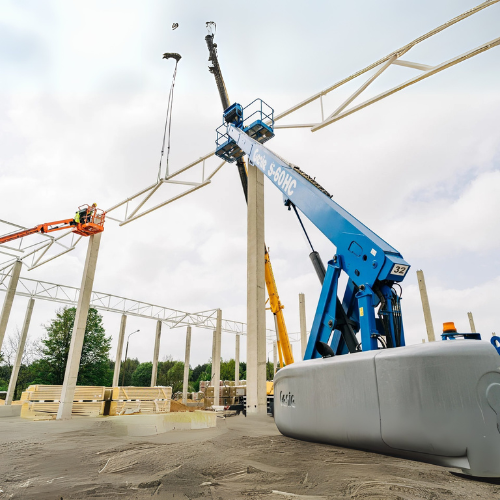
Erection involves the actual placement and securing of assembled parts into their final positions to create a stable, functional structure.

Key Activities:
Lifting and positioning structural components using cranes or manual labor
Securing elements to foundations, walls, or support systems
Aligning frames, walls, and beams with precision
Anchoring structures according to engineering standards
Installing temporary supports or bracing systems
Definition:
Maintenance includes the regular inspection, repair, and refurbishment of structures to preserve safety, usability, and aesthetic condition.
Types of Maintenance:
Preventive Maintenance: Regular inspections, minor repairs, protective coatings (e.g., painting, waterproofing)
Corrective Maintenance: Addressing structural issues, cracks, corrosion, water leaks
Predictive Maintenance: Using sensors or software to forecast when a structure might need repair
Assembling refers to the process of preparing and joining various components—such as beams,
Erection involves the actual placement and securing of assembled parts into their final positions to create a stable, functional structure.
Maintenance includes the regular inspection, repair, and refurbishment
WhatsApp us